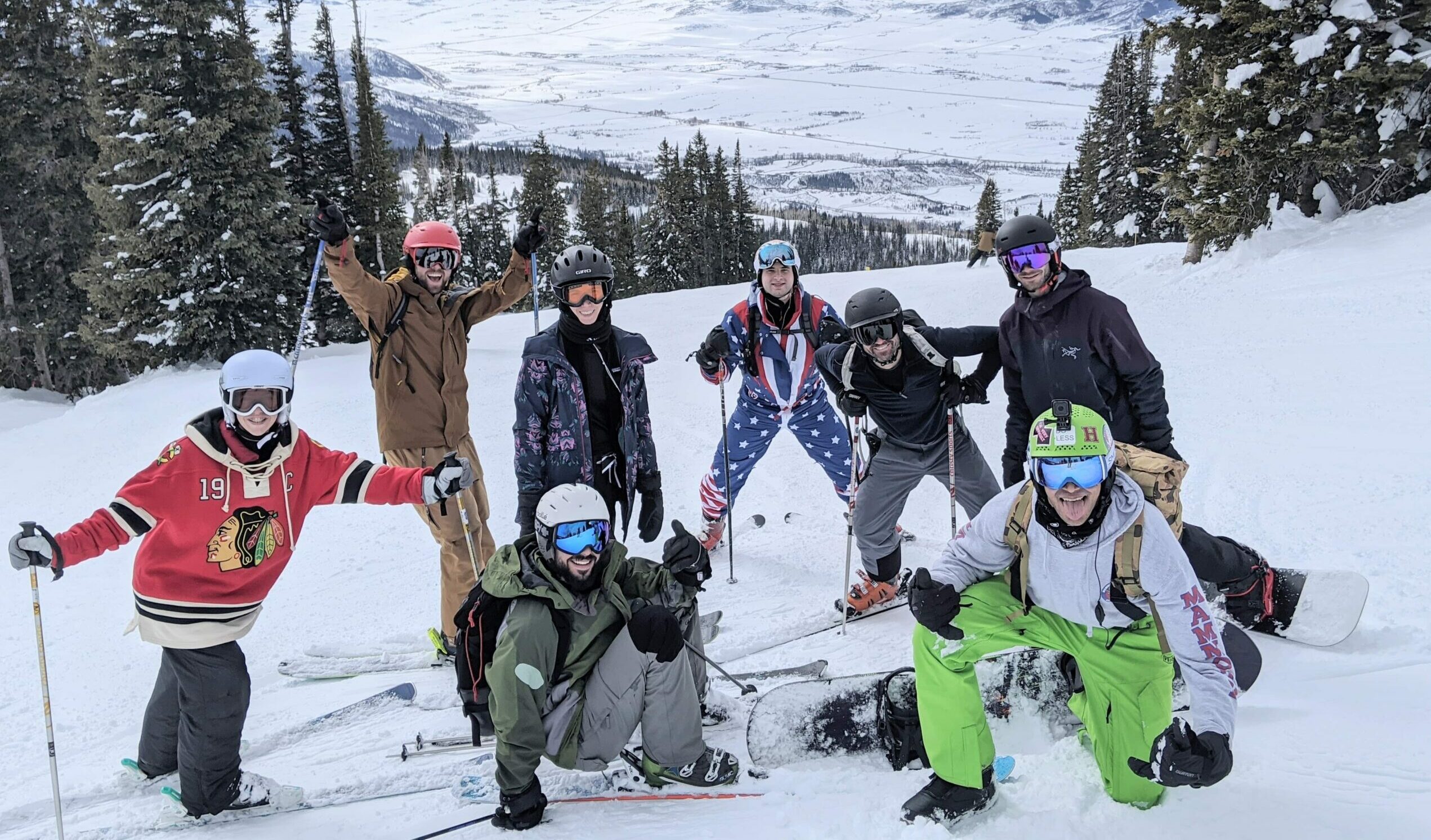
Training for Skiing and Snowboarding
If you are a skier or snowboarder, this is your season. Every year around Thanksgiving the stoke kicks in and you probably tell yourself, ‘I need to get in shape for ski/snowboard season.’ Ideally, you would start a sport-specific training program about 6-8 weeks prior to hitting the mountain. However, assuming you have a good metabolic and strength base, I recommend at least 2-3 weeks of sport-specific training to prepare your body for the demands of the sport.
Your sport-specific preparatory program needs to address the following variables:
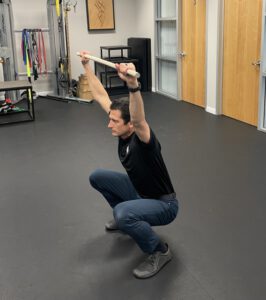 If you are able to perform this test hitting the following criteria, then you likely have sufficient mobility in the sagittal plane of motion:
- Cardiovascular demands
- Mobility demands
- Stability / strength / endurance demands
- Environmental demands
Cardiovascular Demands
Skiing and snowboarding require the body to switch between aerobic and anaerobic metabolism. Essentially, you should have a good aerobic base and also have the ability to tolerate quick, short bursts of high energy output. What’s the best way to train for this?- Common aerobic training methods include jogging, elliptical, biking, and swimming. Start with a distance / time that feels easy and progressively increase that distance / time over the course of each workout, taking 1 day off in between cardio workouts. A general guideline would be to increase your total distance / time by 10-20% each week.
- Common anaerobic training methods include higher intensity, shorter duration versions of the aforementioned aerobic methods. For example, instead of a light jog, sprint for 30 seconds or less. Then rest about 1.5-2 minutes, and repeat. (the work to rest ratio for higher intensity workouts should be at least 1:3). A general guideline is to perform anaerobic training 2-3x / week for about 20 minutes per session. You can do these intervals on a bike, or in a pool, or using stairs, or in combination with strength / endurance training via high intensity interval training (HIIT).
Mobility Demands
The mobility demands of skiing and snowboarding are different, so I will give general principles here. And I’m not only referring to flexibility, but rather the ability to control your movement in all planes of motion. We move in three planes of motion:- Sagittal plane – straight forward / back
- Frontal plane – side to side
- Transverse plane – rotational
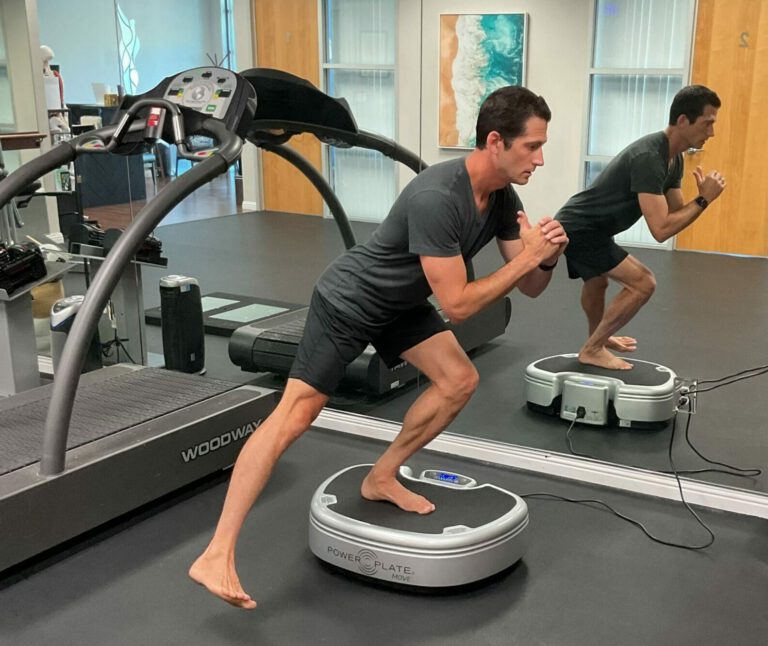
If you are able to perform this test hitting the following criteria, then you likely have sufficient mobility in the sagittal plane of motion:
- Upper trunk parallel with lower leg or toward vertical
- Hips below horizontal
- Knees aligned over feet
- Dowel / bar aligned over feet
Stability / Strength / Endurance Demands
The strength demands of skiing and snowboarding are also different, primarily as it relates to single-leg vs double-leg stability and strength. However, in general, a sport-specific training program for both should include aspects of the following:- Balance
- Core strength and endurance
- Multi-directional upper and lower body strength and endurance
- Double leg and single-leg
- Elasticity training (plyometric training)
Environmental demands
The primary issue at hand here is altitude. Once you are at altitude the basic rules apply:- Drink lots of water
- Avoid or minimize alcohol
- Eat small snacks and meals
- Increase your aerobic and anaerobic capacity as much as possible (see above)
- Deep breathing techniques, such as those popularized by Wim Hof, may help increase your adaptation to altitude – Try this